Primary-care assessment
Evidence to carry forward
Dated history and reason for referral
Question still open
Does specialist care require referral documentation?

Using several vets requires one coherent history for each pet, plus a clear separation between provider eligibility and clinic payment.
Use these checkpoints to frame the literal question before reading the full guide.
Pet insurance can permit care across several veterinary practices. For example, Pets Best advertises eligible care with licensed vets in the US and Canada, including specialists and emergency clinics. That does not make every service payable or every clinic a direct-payment participant.
The sections below show how to verify the answer and what can change it.
Ask whether the treating clinician and location satisfy the policy. Then ask the clinic whether it expects payment at discharge. Those answers can differ. Pets Best’s current coverage page supports the licensed-veterinarian example; it does not establish the arrangements of a particular hospital.
| Visit | Evidence to carry forward | Question still open |
|---|---|---|
| Primary-care assessment | Dated history and reason for referral | Does specialist care require referral documentation? |
| Specialist consultation | Referral letter, findings, test reports | Are consultation and diagnostic fees elected benefits? |
| Emergency follow-up | Discharge summary and itemized bill | Is this the same eligible condition or a separate event? |
Do not infer an insurance referral requirement from a hospital’s appointment process. Conversely, a walk-in appointment is not proof that insurance prerequisites were met. Locate any referral, authorization or provider language in the applicable documents; if none is identified, describe it as unverified rather than inventing a network.
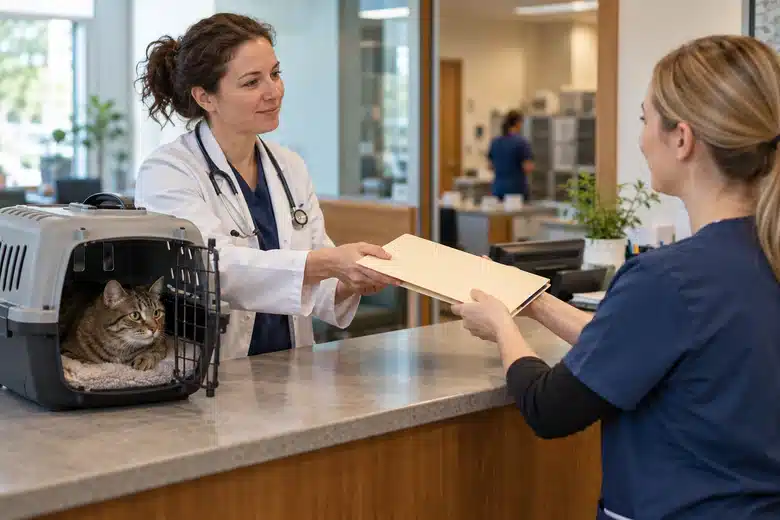
Imagine a cat called Juniper using a regular practice and a specialty hospital, while a dog called Otis uses a different vet. Keep Juniper’s invoices, prior symptoms and benefit balance separate from Otis’s. Multiple clinics do not create multiple pets, and one household account does not prove a shared deductible.
The named Pets Best specimen covers the pet on its declarations and is not transferable to another pet; section 7 can require complete records from all clinics.
| Pet | Eligible charges | Remaining deductible | Illustrative payment |
|---|---|---|---|
| Juniper | $1,500 | $200 | $1,000: 80% first, less $200 |
| Otis | $1,000 | $400 | $400: 80% first, less $400 |
Both rows assume eligible expenses and adequate remaining limits. Juniper’s deductible progress cannot be moved to Otis in this invented separate-policy example. As a separate product example, Embrace describes a 10% multiple-pet discount on the accident-and-illness portion for two or more pets, subject to state and eligibility. That discount does not establish pooled benefits or this household’s premium. Verify the actual offer and keep each pet’s balances separate.
Keep policy terms, deductible, reimbursement and limits beside the quote so the comparison stays consistent.
Pets Best’s direct-pay instructions require a veterinarian release with the claim; eligible reimbursement follows processing. Check each practice separately before relying on deferred payment.
Moving practices does not remove earlier signs from the claim timeline. A complete record helps distinguish a new event from continuation of a previously documented problem.
Use the policy’s deductible basis and pet identity. Do not infer a new deductible merely from a different clinic name.
No. Confirm the arrangement with each clinic and satisfy the insurer’s process.
Keep the policy terms beside the price, then continue to rates when the comparison is clear.